Key Takeaways:
- A Django App is more than just a folder separation.
- It's not primarily a deployment unit, but rather a unit for separating business domains.
- In DRF, it functions like a module per API feature, making its benefits clear.
- In standard Django web apps, its necessity might not be immediately apparent.
- However, as projects grow, the differences in managing models, Admin, tests, and migrations become significant.
- A well-designed App can become a reusable asset that can be moved to other projects later.
Even if a Django project is deployed as a single server, you can divide it into multiple apps using startapp.
This structure is particularly natural for DRF-based headless API servers, but app division still holds significance even for template-based Django web apps.
Why App Division Works Well in DRF
-
Clear API boundaries
-
accounts postsbilling-
notifications -
Each app functions like an independent API bundle
-
models
- serializers
- views / viewsets
- permissions
- urls
-
tests
-
Allows for standard expansion of multiple functionalities within a single DRF server
-
Different apps within the same project can lead to unexpected synergies
-
Post publishing → Notification creation
- Payment status → User permission changes
- User settings → Content display method changes
Common Questions in Standard Django Web Apps
In template-based Django web apps, even if you divide apps, ultimately:
- They run on the same server
- They use the same DB
- They share the same settings
- They are bundled as the same deployment unit
- Template flows can easily intermingle
Therefore, in smaller web apps, one might wonder, “Is dividing apps really necessary?”
Reasons to Still Divide Apps
- Prevents models from becoming too large
- Admin screens are organized by domain
- Migration history is separated by app
- Easier to test specific apps
- Encourages awareness of import structure, helping prevent spaghetti code
- Boundaries are already established for future feature separation or API conversion
Apps Can Become Reusable Components
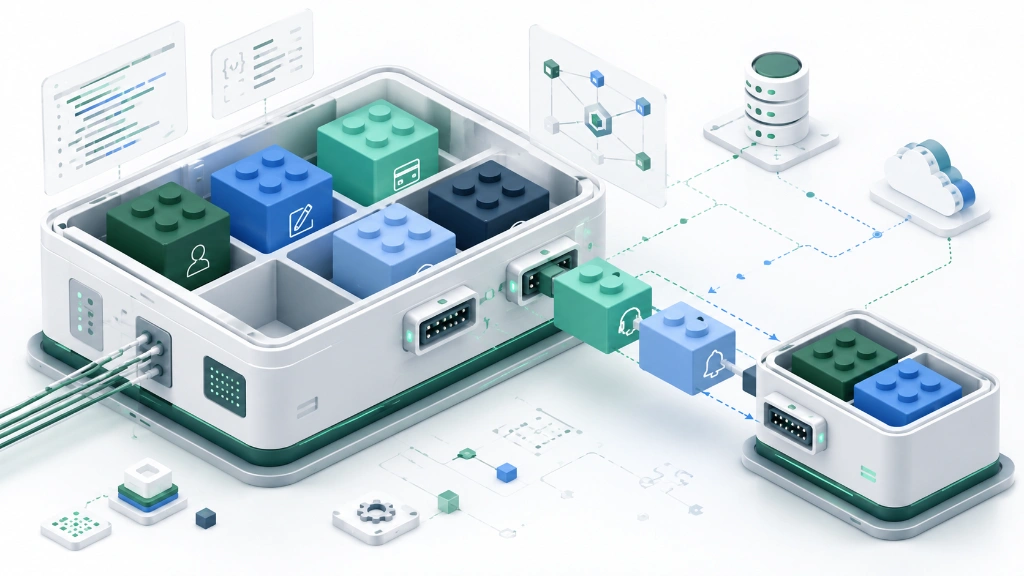
Django's app structure allows you to create features as Plug-and-Play components.
Even apps created within a project, if well-structured, can be easily moved to other projects later.
For example:
- Notification feature →
notifications - Tagging feature →
tags - Payment feature →
billing
If you develop such apps independently, you can reuse them in your next project as follows:
- Copy the app folder
- Add to
INSTALLED_APPS - Connect necessary URLs
- Run migrations
- Adjust templates or settings to fit the project
Famous libraries in the Django ecosystem are also provided in this manner.
-
django-allauth: Provides signup, login, and social login functionalities as an app -
django-taggit: Offers tagging functionality as a reusable app -
django-tailwind: Integrates the Tailwind development environment within a Django project as an app
In essence, a Django App is not just “a folder within my project”; if well-designed, it can become a functional asset that can be reused in other projects.
Good Separation Criteria
Signs that an app should be separated:
- Has independent data models
- Requires a separate Admin group
- Has its own business logic
- You want to run tests separately
- Has the potential to be separated into an API or a separate service later
- The feature name describes a service domain
- Has the potential to be reused in other projects
Examples:
accountsbillingnotificationssupportanalytics
Conclusion
In a Django project, the distinction of an App is:
A structure that folds complexity into human-understandable units as the project grows
And taking it a step further:
A Django-style module system that externalizes reusable functionality as assets
In DRF, this advantage aligns well with API boundaries and is immediately apparent, while in standard Django web apps, its value tends to become clear as the project grows or when you start creating multiple projects.